Faecalibaculum rodentium DSM 103405 is an anaerobe, rod-shaped bacterium that was isolated from faeces, female C57BL/6 J mouse.
rod-shaped anaerobe genome sequence 16S sequence Bacteria| @ref 20215 |
|
|
| Domain Bacteria |
| Phylum Bacillota |
| Class Erysipelotrichia |
| Order Erysipelotrichales |
| Family Erysipelotrichaceae |
| Genus Faecalibaculum |
| Species Faecalibaculum rodentium |
| Full scientific name Faecalibaculum rodentium Chang et al. 2016 |
| BacDive ID | Other strains from Faecalibaculum rodentium (1) | Type strain |
|---|---|---|
| 169656 | F. rodentium CLA-AV-15, DSM 110083 |
| @ref | Name | Growth | Medium link | Composition | |
|---|---|---|---|---|---|
| 24213 | PYG MEDIUM (MODIFIED) (DSMZ Medium 104) | Medium recipe at MediaDive | Name: PYG MEDIUM (modified) (DSMZ Medium 104) Composition: Yeast extract 10.0 g/l Peptone 5.0 g/l Trypticase peptone 5.0 g/l Beef extract 5.0 g/l Glucose 5.0 g/l L-Cysteine HCl x H2O 0.5 g/l NaHCO3 0.4 g/l NaCl 0.08 g/l K2HPO4 0.04 g/l KH2PO4 0.04 g/l MgSO4 x 7 H2O 0.02 g/l CaCl2 x 2 H2O 0.01 g/l Hemin 0.005 g/l Ethanol 0.0038 g/l Resazurin 0.001 g/l Tween 80 Vitamin K1 NaOH Distilled water |
| 67771 | Oxygen toleranceanaerobe |
| 67771 | Spore formationno |
| @ref | pathway | enzyme coverage | annotated reactions | external links | |
|---|---|---|---|---|---|
| 66794 | ribulose monophosphate pathway | 100 | 2 of 2 | ||
| 66794 | L-lactaldehyde degradation | 100 | 3 of 3 | ||
| 66794 | coenzyme A metabolism | 100 | 4 of 4 | ||
| 66794 | teichoic acid biosynthesis | 100 | 1 of 1 | ||
| 66794 | cardiolipin biosynthesis | 100 | 7 of 7 | ||
| 66794 | CDP-diacylglycerol biosynthesis | 100 | 2 of 2 | ||
| 66794 | UDP-GlcNAc biosynthesis | 100 | 3 of 3 | ||
| 66794 | folate polyglutamylation | 100 | 1 of 1 | ||
| 66794 | suberin monomers biosynthesis | 100 | 2 of 2 | ||
| 66794 | methylglyoxal degradation | 100 | 5 of 5 | ||
| 66794 | adipate degradation | 100 | 2 of 2 | ||
| 66794 | peptidoglycan biosynthesis | 93.33 | 14 of 15 | ||
| 66794 | threonine metabolism | 90 | 9 of 10 | ||
| 66794 | aspartate and asparagine metabolism | 88.89 | 8 of 9 | ||
| 66794 | chorismate metabolism | 88.89 | 8 of 9 | ||
| 66794 | Entner Doudoroff pathway | 80 | 8 of 10 | ||
| 66794 | starch degradation | 80 | 8 of 10 | ||
| 66794 | cellulose degradation | 80 | 4 of 5 | ||
| 66794 | metabolism of amino sugars and derivatives | 80 | 4 of 5 | ||
| 66794 | photosynthesis | 78.57 | 11 of 14 | ||
| 66794 | valine metabolism | 77.78 | 7 of 9 | ||
| 66794 | d-mannose degradation | 77.78 | 7 of 9 | ||
| 66794 | palmitate biosynthesis | 77.27 | 17 of 22 | ||
| 66794 | phenylalanine metabolism | 76.92 | 10 of 13 | ||
| 66794 | ppGpp biosynthesis | 75 | 3 of 4 | ||
| 66794 | acetate fermentation | 75 | 3 of 4 | ||
| 66794 | glycogen biosynthesis | 75 | 3 of 4 | ||
| 66794 | C4 and CAM-carbon fixation | 75 | 6 of 8 | ||
| 66794 | butanoate fermentation | 75 | 3 of 4 | ||
| 66794 | isoleucine metabolism | 75 | 6 of 8 | ||
| 66794 | NAD metabolism | 72.22 | 13 of 18 | ||
| 66794 | glutamate and glutamine metabolism | 71.43 | 20 of 28 | ||
| 66794 | reductive acetyl coenzyme A pathway | 71.43 | 5 of 7 | ||
| 66794 | propanol degradation | 71.43 | 5 of 7 | ||
| 66794 | glycolysis | 70.59 | 12 of 17 | ||
| 66794 | pyrimidine metabolism | 68.89 | 31 of 45 | ||
| 66794 | acetoin degradation | 66.67 | 2 of 3 | ||
| 66794 | serine metabolism | 66.67 | 6 of 9 | ||
| 66794 | formaldehyde oxidation | 66.67 | 2 of 3 | ||
| 66794 | octane oxidation | 66.67 | 2 of 3 | ||
| 66794 | purine metabolism | 64.89 | 61 of 94 | ||
| 66794 | metabolism of disaccharids | 63.64 | 7 of 11 | ||
| 66794 | pentose phosphate pathway | 63.64 | 7 of 11 | ||
| 66794 | gluconeogenesis | 62.5 | 5 of 8 | ||
| 66794 | dTDPLrhamnose biosynthesis | 62.5 | 5 of 8 | ||
| 66794 | degradation of sugar alcohols | 62.5 | 10 of 16 | ||
| 66794 | hydrogen production | 60 | 3 of 5 | ||
| 66794 | glycogen metabolism | 60 | 3 of 5 | ||
| 66794 | factor 420 biosynthesis | 60 | 3 of 5 | ||
| 66794 | glycine betaine biosynthesis | 60 | 3 of 5 | ||
| 66794 | citric acid cycle | 57.14 | 8 of 14 | ||
| 66794 | CO2 fixation in Crenarchaeota | 55.56 | 5 of 9 | ||
| 66794 | tryptophan metabolism | 55.26 | 21 of 38 | ||
| 66794 | histidine metabolism | 55.17 | 16 of 29 | ||
| 66794 | alanine metabolism | 55.17 | 16 of 29 | ||
| 66794 | oxidative phosphorylation | 54.95 | 50 of 91 | ||
| 66794 | degradation of hexoses | 50 | 9 of 18 | ||
| 66794 | cis-vaccenate biosynthesis | 50 | 1 of 2 | ||
| 66794 | ethanol fermentation | 50 | 1 of 2 | ||
| 66794 | CMP-KDO biosynthesis | 50 | 2 of 4 | ||
| 66794 | heme metabolism | 50 | 7 of 14 | ||
| 66794 | glycolate and glyoxylate degradation | 50 | 3 of 6 | ||
| 66794 | phenylmercury acetate degradation | 50 | 1 of 2 | ||
| 66794 | kanosamine biosynthesis II | 50 | 1 of 2 | ||
| 66794 | ketogluconate metabolism | 50 | 4 of 8 | ||
| 66794 | tetrahydrofolate metabolism | 50 | 7 of 14 | ||
| 66794 | toluene degradation | 50 | 2 of 4 | ||
| 66794 | arginine metabolism | 50 | 12 of 24 | ||
| 66794 | isoprenoid biosynthesis | 50 | 13 of 26 | ||
| 66794 | methionine metabolism | 50 | 13 of 26 | ||
| 66794 | leucine metabolism | 46.15 | 6 of 13 | ||
| 66794 | vitamin B1 metabolism | 46.15 | 6 of 13 | ||
| 66794 | proline metabolism | 45.45 | 5 of 11 | ||
| 66794 | lysine metabolism | 45.24 | 19 of 42 | ||
| 66794 | cysteine metabolism | 44.44 | 8 of 18 | ||
| 66794 | tyrosine metabolism | 42.86 | 6 of 14 | ||
| 66794 | glutathione metabolism | 42.86 | 6 of 14 | ||
| 66794 | degradation of aromatic, nitrogen containing compounds | 41.67 | 5 of 12 | ||
| 66794 | flavin biosynthesis | 40 | 6 of 15 | ||
| 66794 | glycine metabolism | 40 | 4 of 10 | ||
| 66794 | degradation of pentoses | 39.29 | 11 of 28 | ||
| 66794 | lipid metabolism | 38.71 | 12 of 31 | ||
| 66794 | urea cycle | 38.46 | 5 of 13 | ||
| 66794 | sulfate reduction | 38.46 | 5 of 13 | ||
| 66794 | carnitine metabolism | 37.5 | 3 of 8 | ||
| 66794 | non-pathway related | 36.84 | 14 of 38 | ||
| 66794 | d-xylose degradation | 36.36 | 4 of 11 | ||
| 66794 | degradation of sugar acids | 36 | 9 of 25 | ||
| 66794 | IAA biosynthesis | 33.33 | 1 of 3 | ||
| 66794 | selenocysteine biosynthesis | 33.33 | 2 of 6 | ||
| 66794 | sphingosine metabolism | 33.33 | 2 of 6 | ||
| 66794 | acetyl CoA biosynthesis | 33.33 | 1 of 3 | ||
| 66794 | nitrate assimilation | 33.33 | 3 of 9 | ||
| 66794 | molybdenum cofactor biosynthesis | 33.33 | 3 of 9 | ||
| 66794 | 4-hydroxymandelate degradation | 33.33 | 3 of 9 | ||
| 66794 | lipid A biosynthesis | 33.33 | 3 of 9 | ||
| 66794 | phosphatidylethanolamine bioynthesis | 30.77 | 4 of 13 | ||
| 66794 | phenol degradation | 30 | 6 of 20 | ||
| 66794 | coenzyme M biosynthesis | 30 | 3 of 10 | ||
| 66794 | 4-hydroxyphenylacetate degradation | 30 | 3 of 10 | ||
| 66794 | myo-inositol biosynthesis | 30 | 3 of 10 | ||
| 66794 | bile acid biosynthesis, neutral pathway | 29.41 | 5 of 17 | ||
| 66794 | benzoyl-CoA degradation | 28.57 | 2 of 7 | ||
| 66794 | cyclohexanol degradation | 25 | 1 of 4 | ||
| 66794 | lactate fermentation | 25 | 1 of 4 | ||
| 66794 | 6-hydroxymethyl-dihydropterin diphosphate biosynthesis | 25 | 2 of 8 | ||
| 66794 | ascorbate metabolism | 22.73 | 5 of 22 |
| Cat1 | Cat2 | Cat3 | |
|---|---|---|---|
| #Host | #Mammals | #Muridae (Mouse/Rat) | |
| #Host Body Product | #Gastrointestinal tract | #Feces (Stool) |
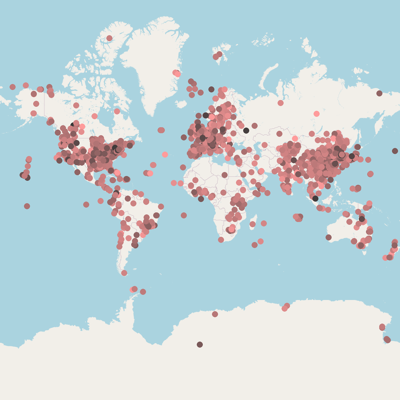
Global distribution of 16S sequence KP881689 (>99% sequence identity) for Faecalibaculum rodentium subclade from Microbeatlas ![]()
| @ref | Biosafety level | Biosafety level comment | |
|---|---|---|---|
| 24213 | 1 | Risk group (German classification) |
| @ref | Description | Assembly level | INSDC accession | BV-BRC accession | IMG accession | NCBI tax ID | Score | |
|---|---|---|---|---|---|---|---|---|
| 67770 | ASM156445v1 assembly for Faecalibaculum rodentium ALO17 | complete | 1702221 | 95.17 |
| Topic | Title | Authors | Journal | DOI | Year | |
|---|---|---|---|---|---|---|
| Disentangling the impact of obesity, diet, host factors, and microbiota on small intestinal antimicrobial peptide expression. | Puertolas-Balint F, Prasoodanan P K V, Holmberg SM, Schroeder BO. | Gut Microbes | 10.1080/19490976.2025.2536095 | 2025 | ||
| Metabolism | Sulfoquinovose is exclusively metabolized by the gut microbiota and degraded differently in mice and humans. | Krasenbrink J, Hanson BT, Weiss AS, Borusak S, Tanabe TS, Lang M, Aichinger G, Hausmann B, Berry D, Richter A, Marko D, Mussmann M, Schleheck D, Stecher B, Loy A. | Microbiome | 10.1186/s40168-025-02175-x | 2025 | |
| Antibiotic-induced disturbances of the gut microbiota result in accelerated breast tumor growth. | McKee AM, Kirkup BM, Madgwick M, Fowler WJ, Price CA, Dreger SA, Ansorge R, Makin KA, Caim S, Le Gall G, Paveley J, Leclaire C, Dalby M, Alcon-Giner C, Andrusaite A, Feng TY, Di Modica M, Triulzi T, Tagliabue E, Milling SWF, Weilbaecher KN, Rutkowski MR, Korcsmaros T, Hall LJ, Robinson SD. | iScience | 10.1016/j.isci.2021.103012 | 2021 | ||
| The microbiota conditions a gut milieu that selects for wild-type Salmonella Typhimurium virulence. | Gul E, Bakkeren E, Salazar G, Steiger Y, Abi Younes A, Clerc M, Christen P, Fattinger SA, Nguyen BD, Kiefer P, Slack E, Ackermann M, Vorholt JA, Sunagawa S, Diard M, Hardt WD. | PLoS Biol | 10.1371/journal.pbio.3002253 | 2023 | ||
| Gut-derived Faecalibaculum rodentium exerts anti-cancer effects on colorectal cancer by modulating PDPN-CLEC-2 signaling pathway. | Yang X, Liu M, Wang T, Ma X, Guan Z, Ma B, Duan X, Su C. | mSystems | 10.1128/msystems.00148-25 | 2025 | ||
| Genetics | Whole genome sequencing of "Faecalibaculum rodentium" ALO17, isolated from C57BL/6J laboratory mouse feces. | Lim S, Chang DH, Ahn S, Kim BC | Gut Pathog | 10.1186/s13099-016-0087-3 | 2016 | |
| Phylogeny | Faecalibaculum rodentium gen. nov., sp. nov., isolated from the faeces of a laboratory mouse. | Chang DH, Rhee MS, Ahn S, Bang BH, Oh JE, Lee HK, Kim BC | Antonie Van Leeuwenhoek | 10.1007/s10482-015-0583-3 | 2015 |
| #20215 | Parte, A.C., Sardà Carbasse, J., Meier-Kolthoff, J.P., Reimer, L.C. and Göker, M.: List of Prokaryotic names with Standing in Nomenclature (LPSN) moves to the DSMZ. IJSEM ( DOI 10.1099/ijsem.0.004332 ) |
| #24213 | Leibniz Institut DSMZ-Deutsche Sammlung von Mikroorganismen und Zellkulturen GmbH ; Curators of the DSMZ; DSM 103405 |
| #66794 | Antje Chang, Lisa Jeske, Sandra Ulbrich, Julia Hofmann, Julia Koblitz, Ida Schomburg, Meina Neumann-Schaal, Dieter Jahn, Dietmar Schomburg: BRENDA, the ELIXIR core data resource in 2021: new developments and updates. Nucleic Acids Res. 49: D498 - D508 2020 ( DOI 10.1093/nar/gkaa1025 , PubMed 33211880 ) |
| #67770 | Japan Collection of Microorganism (JCM) ; Curators of the JCM; |
| #67771 | Korean Collection for Type Cultures (KCTC) ; Curators of the KCTC; |
| #69479 | João F Matias Rodrigues, Janko Tackmann,Gregor Rot, Thomas SB Schmidt, Lukas Malfertheiner, Mihai Danaila,Marija Dmitrijeva, Daniela Gaio, Nicolas Näpflin and Christian von Mering. University of Zurich.: MicrobeAtlas 1.0 beta . |
| #124043 | Isabel Schober, Julia Koblitz: Data extracted from sequence databases, automatically matched based on designation and taxonomy . |
| #126262 | A. Lissin, I. Schober, J. F. Witte, H. Lüken, A. Podstawka, J. Koblitz, B. Bunk, P. Dawyndt, P. Vandamme, P. de Vos, J. Overmann, L. C. Reimer: StrainInfo—the central database for linked microbial strain identifiers. ( DOI 10.1093/database/baaf059 ) |
You found an error in BacDive? Please tell us about it!
Note that changes will be reviewed and judged. If your changes are legitimate, changes will occur within the next BacDive update. Only proposed changes supported by the according reference will be reviewed. The BacDive team reserves the right to reject proposed changes.
Successfully sent
If you want to cite this particular strain cite the following doi:
https://doi.org/10.13145/bacdive132424.20251217.10
When using BacDive for research please cite the following paper
BacDive in 2025: the core database for prokaryotic strain data