Micrococcus luteus AE-6 is a bacterium that was isolated from inner tissues of a fresh leaf from Aloe barbadensis .
genome sequence 16S sequence Bacteria| @ref 20215 |
|
|
| Domain Bacteria |
| Phylum Actinomycetota |
| Class Actinomycetes |
| Order Micrococcales |
| Family Micrococcaceae |
| Genus Micrococcus |
| Species Micrococcus luteus |
| Full scientific name Micrococcus luteus (Schroeter 1872) Cohn 1872 (Approved Lists 1980) |
| Synonyms (3) |
| @ref | Oxygen tolerance | Confidence | |
|---|---|---|---|
| 125439 | facultative anaerobe | 96.641 |
| Cat1 | Cat2 | Cat3 | |
|---|---|---|---|
| #Host | #Plants | #Herbaceous plants (Grass,Crops) | |
| #Host Body-Site | #Plant | #Leaf (Phyllosphere) |
| @ref | Sample type | Host species | Geographic location | Country | Country ISO 3 Code | Continent | |
|---|---|---|---|---|---|---|---|
| 21675 | inner tissues of a fresh leaf from Aloe barbadensis (Aloe vera) | Aloe barbadensis | Maharashtra, Pune | India | IND | Asia |
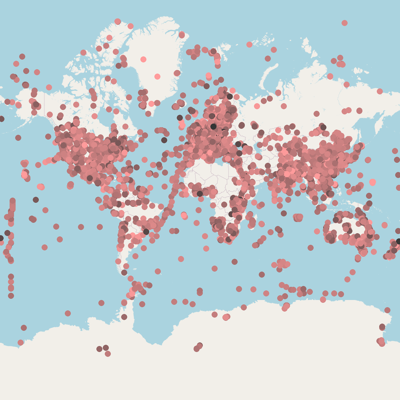
Global distribution of 16S sequence KF524364 (>99% sequence identity) for Micrococcus from Microbeatlas ![]()
| @ref | Description | Assembly level | INSDC accession | BV-BRC accession | NCBI tax ID | Score | |
|---|---|---|---|---|---|---|---|
| 66792 | ASM2266440v1 assembly for Micrococcus aloeverae DSM 27472 | scaffold | 1391911 | 65.6 |
| @ref | Description | Accession | Length | Database | NCBI tax ID | |
|---|---|---|---|---|---|---|
| 21675 | Micrococcus aloeverae strain AE-6 16S ribosomal RNA gene, partial sequence | KF524364 | 1411 | 1391911 |
| @ref | GC-content (mol%) | Method | |
|---|---|---|---|
| 21675 | 70 | fluorimetric |
| @ref | Trait | Model | Prediction | Confidence in % | In training data |
|---|---|---|---|---|---|
| 125439 | gram_stain | BacteriaNetⓘ | positive | 99.46 | no |
| 125439 | oxygen_tolerance | BacteriaNetⓘ | facultative anaerobe | 96.64 | no |
| 125439 | motility | BacteriaNetⓘ | no | 92.67 | no |
| 125439 | spore_formation | BacteriaNetⓘ | yes | 56.37 | no |
| @ref | Trait | Model | Prediction | Confidence in % | In training data |
|---|---|---|---|---|---|
| 125438 | gram-positive | gram-positiveⓘ | yes | 91.81 | no |
| 125438 | anaerobic | anaerobicⓘ | no | 97.33 | no |
| 125438 | aerobic | aerobicⓘ | yes | 84.47 | no |
| 125438 | spore-forming | spore-formingⓘ | no | 82.56 | no |
| 125438 | thermophilic | thermophileⓘ | no | 97.00 | no |
| 125438 | flagellated | motile2+ⓘ | no | 93.50 | no |
| Topic | Title | Authors | Journal | DOI | Year | |
|---|---|---|---|---|---|---|
| Genetics | Draft genome sequence data of Micrococcus yunnanesis strain ORF15-23 from rice rhizosphere soil in Thailand. | Chinachanta K, Chaiwan F, Luu DT, Pathom-Aree W. | Data Brief | 10.1016/j.dib.2024.110466 | 2024 | |
| Unravelling the genetic and functional diversity of dominant bacterial communities involved in manure co-composting bioremediation of complex crude oil waste sludge. | Ubani O, Atagana HI, Selvarajan R, Ogola HJ. | Heliyon | 10.1016/j.heliyon.2022.e08945 | 2022 | ||
| Transcriptome | Partial rpoB Gene Sequencing Identification and Probiotic Potential of Floricoccus penangensis ML061-4 Isolated from Assam Tea (Camellia sinensis var. assamica). | Rungsirivanich P, Inta A, Tragoolpua Y, Thongwai N. | Sci Rep | 10.1038/s41598-019-52979-9 | 2019 | |
| Phylogeny | A 16S rRNA Gene and Draft Genome Database for the Murine Oral Bacterial Community. | Joseph S, Aduse-Opoku J, Hashim A, Hanski E, Streich R, Knowles SCL, Pedersen AB, Wade WG, Curtis MA. | mSystems | 10.1128/msystems.01222-20 | 2021 | |
| Biotechnology | Optimization of Nutrients and Culture Conditions for Alkaline Protease Production Using Two Endophytic Micrococci: Micrococcus aloeverae and Micrococcus yunnanensis. | Prakash O, Nimonkar Y, Chavadar MS, Bharti N, Pawar S, Sharma A, Shouche YS | Indian J Microbiol | 10.1007/s12088-017-0638-4 | 2017 | |
| Phylogeny | Description of Micrococcus aloeverae sp. nov., an endophytic actinobacterium isolated from Aloe vera. | Prakash O, Nimonkar Y, Munot H, Sharma A, Vemuluri VR, Chavadar MS, Shouche YS | Int J Syst Evol Microbiol | 10.1099/ijs.0.063339-0 | 2014 | |
| Phylogeny | Micrococcus porci sp. nov., Isolated from Feces of Black Pig (Sus scrofa). | Lee AY, Chen CH, Liou JS, Lin YC, Hamada M, Wang YT, Peng LL, Chang SC, Chen CC, Lin CF, Huang L, Huang CH | Life (Basel) | 10.3390/life12111749 | 2022 |
| #20215 | Parte, A.C., Sardà Carbasse, J., Meier-Kolthoff, J.P., Reimer, L.C. and Göker, M.: List of Prokaryotic names with Standing in Nomenclature (LPSN) moves to the DSMZ. IJSEM ( DOI 10.1099/ijsem.0.004332 ) |
| #21675 | Leibniz Institut DSMZ-Deutsche Sammlung von Mikroorganismen und Zellkulturen GmbH ; Curators of the DSMZ; DSM 27472 |
| #66792 | Julia Koblitz, Joaquim Sardà, Lorenz Christian Reimer, Boyke Bunk, Jörg Overmann: Automatically annotated for the DiASPora project (Digital Approaches for the Synthesis of Poorly Accessible Biodiversity Information) . |
| #69479 | João F Matias Rodrigues, Janko Tackmann,Gregor Rot, Thomas SB Schmidt, Lukas Malfertheiner, Mihai Danaila,Marija Dmitrijeva, Daniela Gaio, Nicolas Näpflin and Christian von Mering. University of Zurich.: MicrobeAtlas 1.0 beta . |
| #125438 | Julia Koblitz, Lorenz Christian Reimer, Rüdiger Pukall, Jörg Overmann: Predicting bacterial phenotypic traits through improved machine learning using high-quality, curated datasets. 2024 ( DOI 10.1101/2024.08.12.607695 ) |
| #125439 | Philipp Münch, René Mreches, Martin Binder, Hüseyin Anil Gündüz, Xiao-Yin To, Alice McHardy: deepG: Deep Learning for Genome Sequence Data. R package version 0.3.1 . |
You found an error in BacDive? Please tell us about it!
Note that changes will be reviewed and judged. If your changes are legitimate, changes will occur within the next BacDive update. Only proposed changes supported by the according reference will be reviewed. The BacDive team reserves the right to reject proposed changes.
Successfully sent
If you want to cite this particular strain cite the following doi:
https://doi.org/10.13145/bacdive130433.20260601.11
When using BacDive for research please cite the following paper
BacDive in 2025: the core database for prokaryotic strain data